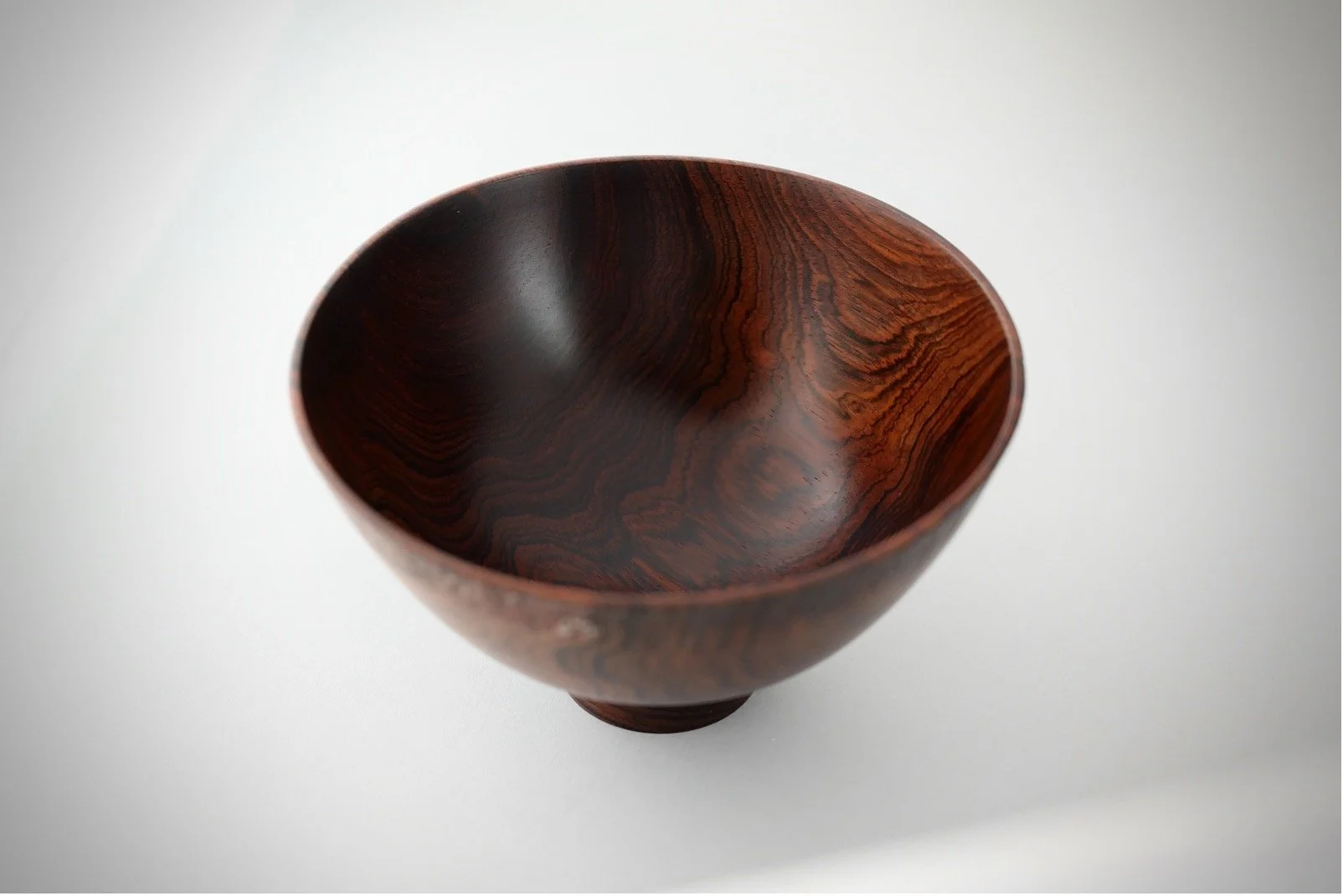
Bob Stocksdale | 1913 - 2003
Turning Utility into Grace
When Bob Stocksdale touched wood, he listened intently. From a single block, he turned bowls so balanced, so quiet in their beauty. In an age of speed, Stocksdale made stillness his signature—transforming utility into grace, and craft into legacy. Stocksdale was a central figure in the American Craft Movement, elevating woodturning from folk tradition to fine art. Although tools and techniques diverged, Bob Stocksdale, George Nakashima and Sam Maloof stood side-by-side as pioneers of the American Craft Movement, united by reverence for wood as material and collaborator.
Each piece — a conversation with nature, tradition, and time itself.
s
The Pursuit of Form
It began with a pocketknife. As a boy influenced by rural upbringing and natural surroundings that would later inspire his work, Stocksdale whittled a deep lifelong connection to wood. A self-taught artist, Stocksdale earned international acclaim for flawless wood bowls turned from rare and exotic hardwoods. Stocksdale was a master of restraint. Nothing superfluous just material, honed to perfection through skill and discipline.
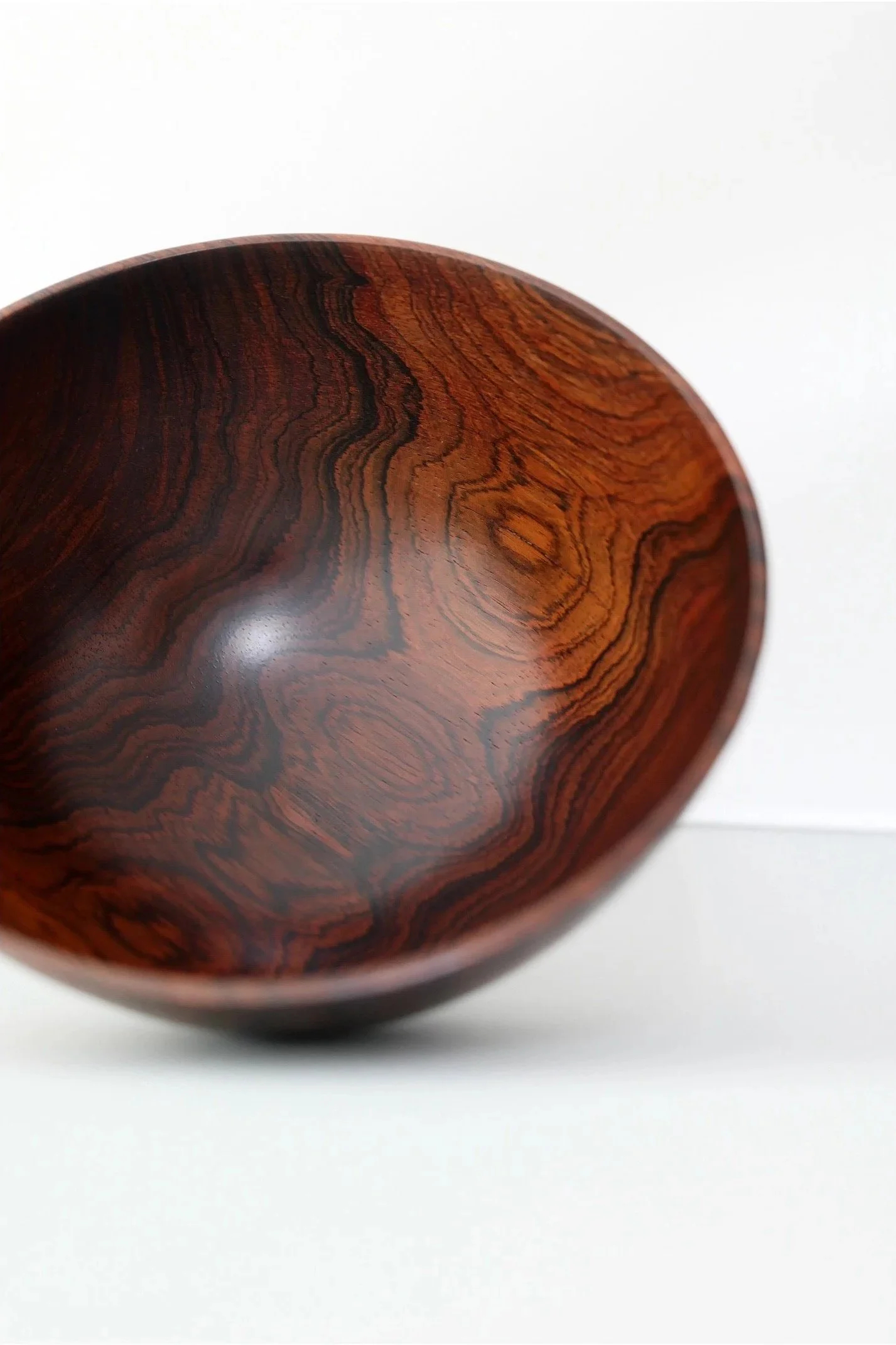
His bowls are impossibly thin, feather-light to touch, with curves so precise they feel inevitable. No decoration. No distraction. He let the wood speak, expressing a belief that grain, form, and spirit of the material guide the hand. Stripped of ornamentation—pure in line, deliberate in curve, shaped only by what the wood itself allows. With finesse and precision, he refined the bowl to its essential form — turning exotic woods into vessels of profound simplicity. Made to be touched, held, and lived with as minimal portraits of material buauty. Each balanced, tactile and deeply sublime.
Material Dialogue
Like a tea master, Stocksdale infused his bowls with a sense of calm and presence. Form was never imposed; it was drawn from material. Stocksdale traveled the world in search of unusual and rare hardwoods chosen for how it might yield under hand. He believed that each species of wood had a unique voice—color, grain, texture, even scent, which he worked to honor that individuality. He had a unique ability to highlight the inherent characteristics of each piece of wood to reveal the diversity and richness of nature through turning. This philosophy set him apart from many of his contemporaries and established him as a master of his craft.
Bob Stocksdale was a poet of the lathe—his voice subtle, his legacy deep. where turning became a skill, and a philosophy of humility and patience. Each piece became an exchange between hand, form and grain. With each cut, new wood emerged. Stocksdale often stopped to calculate the effect of continuing on the current path or altering the design to honor the wood’s unfolding beauty.
In essence, Bob Stocksdale distilled the soul of wood into timeless, tactile form. In a world that moves too fast, Stocksdale and Nakashima remind us that beauty can be contemplative, and that wood—when treated as material and collaborator— tells its story. Stocksdale returned, again and again, to the same form—distilling craft into ethos. His bowls sit like poems: precise, compact, contemplative. In turning wood, his humble bowl turned philosophy into practice.